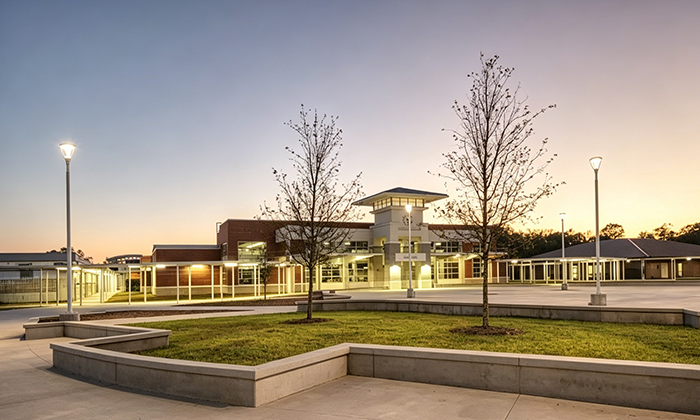
As night falls, thoughtfully designed outdoor lighting can transform an ordinary yard, patio, or commercial space into a captivating nighttime scene. Outdoor lighting not only provides safety and functionality but also creates ambiance, highlights architectural features, and extends the usable hours of outdoor spaces. According to the Illuminating Engineering Society of North America, well-designed outdoor lighting can increase property values by 20% while reducing safety incidents by up to 30%. This guide will walk you through the basics of outdoor lighting, covering everything from fixture types and design principles to installation tips and maintenance advice, providing you with a comprehensive introduction to outdoor lighting.
Basics of Outdoor Lighting
1. The Core Functions of Outdoor Lighting
Outdoor lighting systems typically need to fulfill three basic functions: safety, functionality, and aesthetics. Safety lighting includes path lighting, step lighting, and entrance lighting, which help prevent falls and other accidents; functional lighting provides sufficient illumination for outdoor activities such as cooking, reading, or entertainment; and aesthetic lighting is used to highlight landscape features, architectural details, or create a specific ambiance.
2. Explanation of Optical Terminology
Understanding basic lighting terminology is essential for selecting the right lighting:
Lumen: The unit of measurement for luminous flux, representing the total amount of visible light emitted by a light source.
Color Temperature (Kelvin): Describes the warmth or coolness of light; 2700K–3000K is warm white light, and 4000K and above is cool white light.
Color Rendering Index (CRI): Measures a light source’s ability to reproduce the true colors of objects; a CRI of 80 or higher is recommended for outdoor lighting.
Beam Angle: The angle of light distribution; narrow beams (15°–30°) are used for accent lighting, while wide beams (60°–120°) are used for flood lighting.
3. Voltage Selection: 12V Low-Voltage vs. 120V/240V High-Voltage Systems
Low-voltage systems (typically 12V) are safer, offer greater installation flexibility, and consume less energy, making them ideal for DIY projects and small residential applications; high-voltage systems provide greater light intensity and longer transmission distances, making them suitable for large commercial projects or areas requiring high-intensity lighting. According to data from the U.S. Department of Energy, low-voltage LED systems can save 75–80% more energy than traditional high-voltage halogen systems.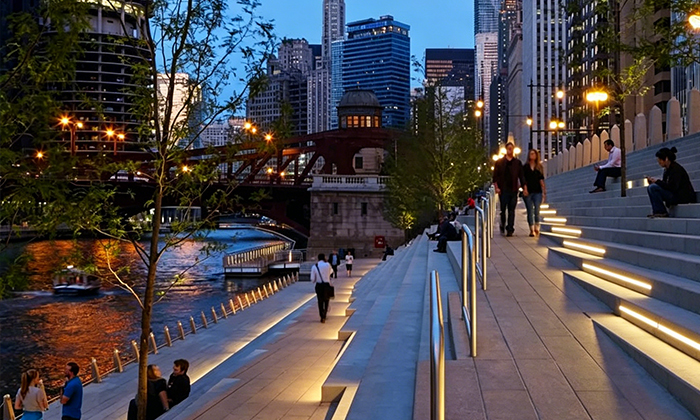
Types and Applications of Outdoor Lighting Fixtures
1. Basic Lighting Fixture Types
Table: Common Types of Outdoor Lighting and Their Uses
| Light Fixture Type | Primary Use | Installation Height | Recommended Light Source |
| Path Lights | Lighting for walkways and driveways | 0.5–1 m above the ground | 2–5W LED |
| Wall Sconces | Entrances and wall accents | 1.8–2 m above the door frame | 5–15W LED |
| Spotlights | Accent lighting for buildings and plants | On the floor or wall | Narrow-beam LED |
| Floodlights | Wide-area safety lighting | 3–6 m from the eaves or freestanding | High-lumen LED |
| Step Lights | Stairway safety lighting | Recessed into the steps | 1–3W LED |
| Underwater Lights | Pond and water feature lighting | 30–50 cm underwater | IP68 waterproof LED |
2. Professional Lighting Solutions
For special requirements, consider the following:
Moonlight Effect Lighting: Install fixtures high up in trees to cast light downward, simulating the effect of natural moonlight.
Silhouette Lighting: Position lights behind objects to create dramatic outlines.
Backlighting: Use translucent materials (such as stone or glass) and illuminate them from behind.
Fiber Optic Lighting: Ideal for pools or flammable areas, as it provides complete electrical isolation.
3. Smart Lighting System
Modern smart lighting systems offer remote control, automated scheduling, motion detection, and the ability to integrate with other smart home devices. According to research by Parks Associates, approximately 35% of U.S. households are already using some form of smart outdoor lighting. Common protocols include Zigbee, Z-Wave, and Wi-Fi; system compatibility and security should be considered when making a selection.
Design Principles and Layout Strategies
1. Layered Lighting Method
Professional designers use a three-tier lighting approach:
1. Ambient lighting: Provides general illumination (e.g., wall sconces, post lights).
2. Task lighting: Designed for specific activities (e.g., barbecue areas, reading areas).
3. Accent lighting: Highlights landscape features (e.g., trees, sculptures).
2. Key Design Principles
Light Pollution Control: Use full-cutoff fixtures to prevent upward light spill.
Contrast: Maintain a brightness ratio of 3:1 to 5:1 to create visual interest.
Visual Guidance: Use lighting to guide the eye toward the focal point of the landscape.
Seasonal Considerations: Deciduous plants require different lighting strategies in winter.
3. Layout Techniques
The spacing between path lights should be 2 to 3 times the height of the fixture.
Entrance lighting should provide an illuminance of 50 to 100 lux.
To avoid the “runway effect,” stagger the placement of path lights for a more natural look.
Use light sources of varying heights to create a sense of depth.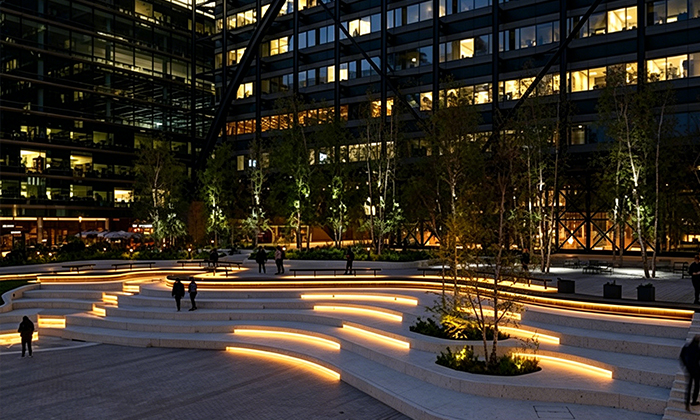
Installation and Maintenance
1. Installation Notes
Use dedicated low-voltage cables (typically 12–16 AWG) and waterproof junction boxes for underground wiring.
Follow the principle that “no single transformer should be loaded beyond 80% of its capacity.”
When spacing fixtures, allow for light beam overlap (approximately 30–50%).
Use waterproof tape and sealant at all connections.
2. Maintenance Plan
Table: Outdoor Lighting Maintenance Checklist
| Frequency | Inspection Items | Instructions |
| Weekly | Light fixture cleaning | Wipe the lampshade with a soft cloth |
| Monthly | Plant pruning | Keep a distance of 30 cm from the light fixture |
| Quarterly | Wiring inspection | Check for corrosion or loose parts |
| Semiannually | Angle adjustment | Suitable for plant growth |
| Annually | System testing | Replace defective parts |
Dimming lights: Usually caused by a drop in voltage; check connections or install a transformer.
Flickering: May be caused by moisture intrusion or wiring issues.
Overheating fixtures: Ensure proper ventilation and use the correct wattage.
Wildlife interference: Choose gnaw-resistant cables or metal sheathing.
Energy Efficiency and Innovation Trends
1. Energy-saving strategies
Using LED technology can reduce energy consumption by 50–80%.
Using motion sensors can reduce energy consumption by 40–60%.
Photovoltaic lighting systems operate completely off-grid.
Smart scheduling prevents unnecessary lighting.
2. Emerging Trends
Solar + Energy Storage System: Charges during the day and provides power at night.
Li-Fi Technology: Transmits data via light.
Adaptive Lighting: Automatically adjusts based on ambient light.
Ecologically Sensitive Design: Minimizes impact on wildlife.
3. Cost Analysis
Although LEDs have a higher upfront cost, their lifetime costs are significantly lower. Taking a typical 50W halogen pathway light as an example, switching to a 5W LED results in:
Annual energy consumption dropping from 438 kWh to 43.8 kWh.
Electricity savings of approximately $50 per year (based on $0.12/kWh).
The bulb’s lifespan increasing from 2,000 hours to 50,000 hours.
Conclusion: Creating the Perfect Outdoor Lighting
Outdoor lighting is a blend of art and science, requiring a balance between functional needs, aesthetic expression, and technical constraints. By understanding the fundamentals, selecting the right fixtures, and following sound design practices, you can create an outdoor lighting environment that is both practical and captivating. Remember, the best lighting designs are those that go unnoticed—they blend naturally into the surroundings while perfectly serving all needs. Start planning your outdoor lighting project today and breathe new life into your outdoor spaces at night.
